
Executive Summary
At a manufacturing company in Shah Alam, Malaysia, the survey began as an insurance requirement — the insurer wanted evidence that the electrical distribution system had been inspected. On that basis, the plant engaged AMKA Technologies for a comprehensive thermographic survey across the facility.
The inspection was executed during peak operational hours, with equipment live and energized, using calibrated thermal imaging. The resulting report identified three Danger-rated findings and explained the equipment-loss, motor-damage, and fire risks that could arise if they were left uncorrected.
4-Tier Severity Classification System
To ensure prioritized, defensible corrective actions, AMKA evaluated all temperature variations (ΔT) against standard industrial severity criteria. Evaluations were conducted using the Direct Method (direct line of sight to failure point) and Indirect Method (measuring accessible surface temperatures to infer concealed component conditions).
| Severity | ΔT vs. Similar Components | ΔT Over Ambient | Recommended Action |
|---|---|---|---|
| Normal | < 1°C | < 1°C | No anomalies; normal operational state. |
| Low Alarm | 1°C – 5°C | 1°C – 10°C | Monitor; re-check at the next convenient opportunity. |
| High Alarm | 6°C – 15°C | 11°C – 40°C | Serious; repair at the next scheduled shutdown. |
| Danger | > 15°C | > 40°C | Very serious; immediate corrective action required. |
Critical Field Findings
1. Plastic Injection Area: Undersized Distribution Board & Unbalanced Load
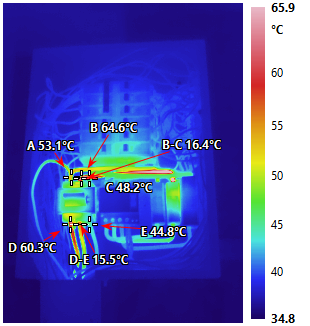
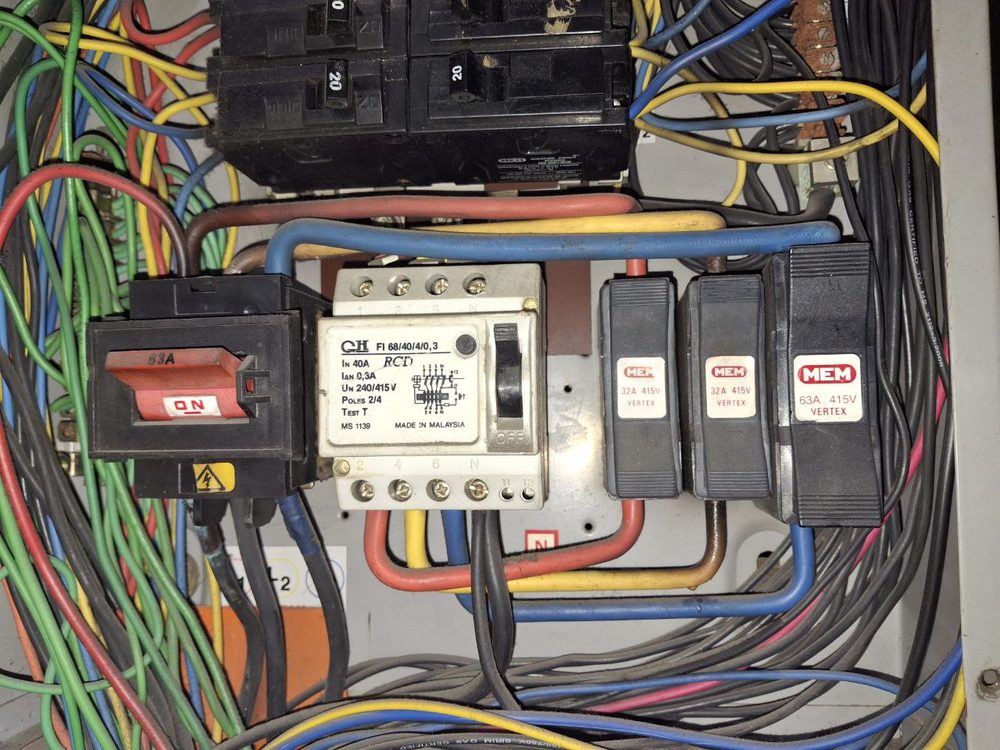
- Equipment Evaluated: Plastic Injection Distribution Board (DB)
- Severity Category: Danger (ΔT > 15°C)
- Diagnostic Findings: Thermographic scanning revealed two simultaneous critical anomalies:
- Unbalanced Load at Spot B: Phase B exhibited a temperature difference exceeding 15°C compared to adjacent phases under identical operating conditions.
- Loose Connection at Spot D: Phase A showed localized resistance heating indicative of a deteriorated terminal connection.
- Risk Assessment: Left unchecked, resistance heating and potential arcing presented a serious electrical fire risk. Total current draw also indicated that the existing 40A distribution board was undersized for the connected machine load.
- Engineering Recommendation: Immediate replacement and upgrade of the distribution board from 40A to 63A, alongside terminal retightening and load rebalancing across all three phases.
2. Die Cast Area: Danger-class Breaker Terminal Finding
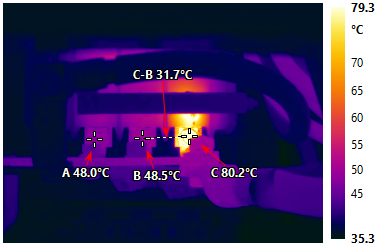
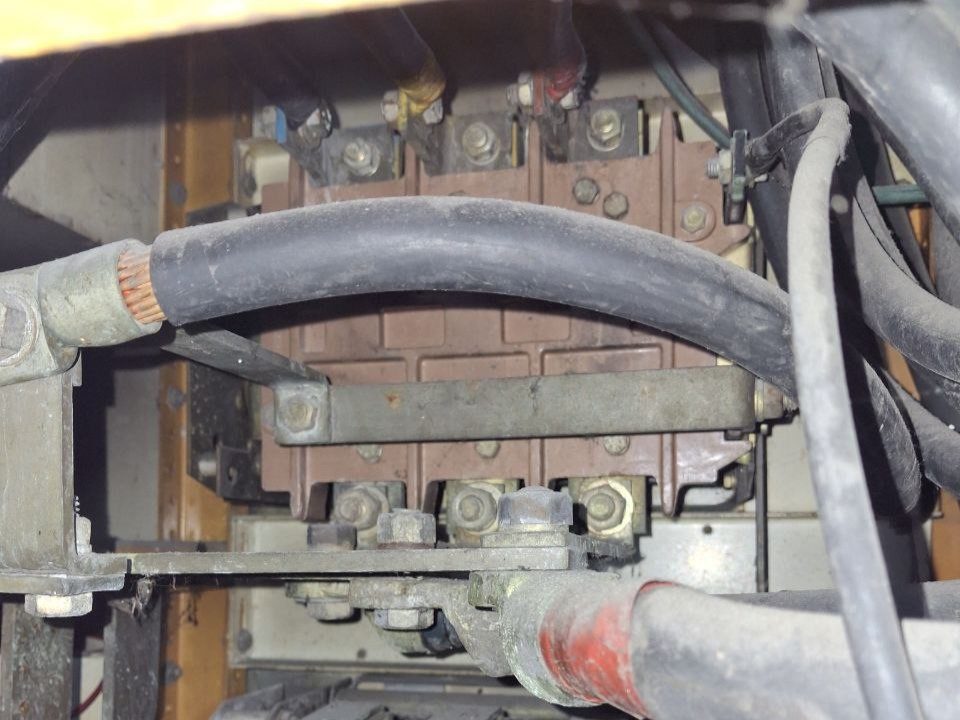
- Equipment Evaluated: Main Breaker (Die Cast Section)
- Severity Category: Danger (reported ΔT above 15°C)
- Diagnostic Findings: A significant hotspot was identified at Spot C on the primary circuit breaker relative to comparable operational components.
- Risk Assessment: A temperature rise of this magnitude points to internal oxidation or a loose terminal connection under high current draw. Breaker failure during a die-casting cycle would force an unplanned shutdown and scrap the in-progress cast.
- Engineering Recommendation: Immediate de-energization during a planned micro-outage to service the breaker, torque terminal connections to manufacturer specification, and inspect fuse holder integrity.
3. Compressor Room: Isolator Switch Risking Motor Single-Phasing
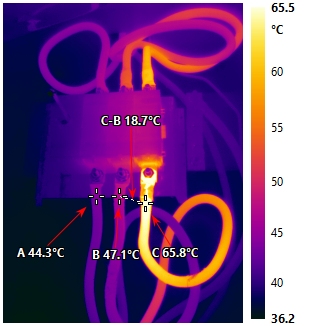
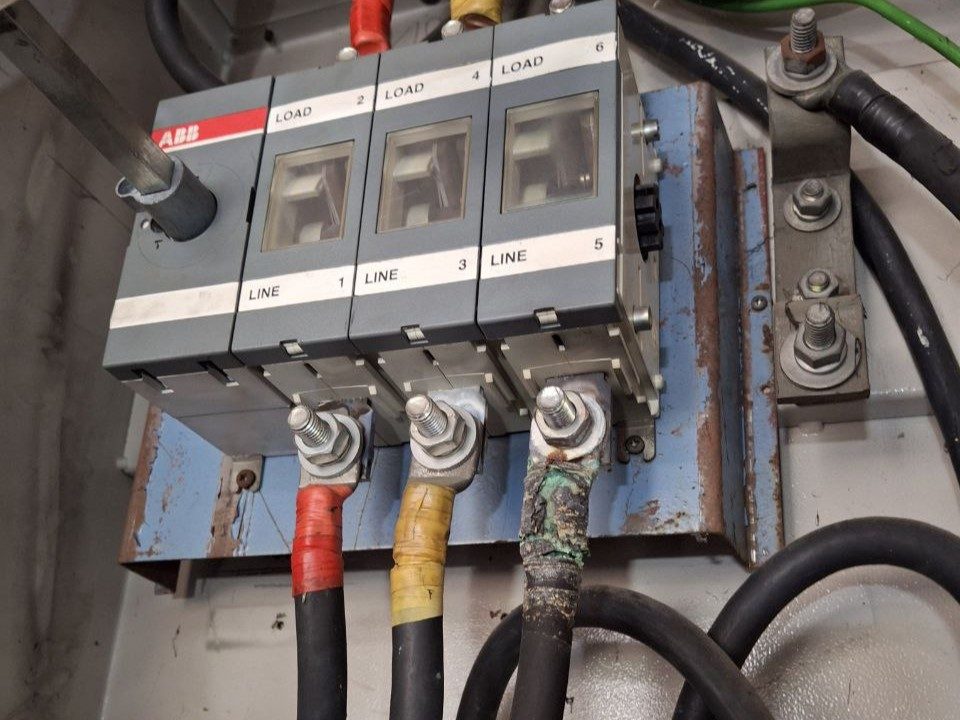
- Equipment Evaluated: Isolator Switch (Compressor Room)
- Severity Category: Danger (reported ΔT above 15°C)
- Diagnostic Findings: Scanning detected a significant thermal anomaly at Spot C on the isolator switch compared with adjacent phases.
- Risk Assessment: This anomaly was traced to a visible deteriorated connection. In a 3-phase industrial compressor system, terminal failure on a single phase causes single-phasing—forcing the remaining two phases to carry excessive current. That overheats the compressor motor windings, risking motor burnout and loss of the plant’s compressed-air supply.
- Engineering Recommendation: Immediate corrective maintenance to replace deteriorated terminal lugs and re-torque connections, preserving compressor motor integrity.
Recommendations and Engagement Boundary
The report recommended planned corrective work: retightening or repairing the flagged terminal connections, rebalancing the phase loads, and upgrading the plastic injection board from 40A to 63A. AMKA’s engagement concluded with a condition report in which the anomalies were severity-rated and prioritised, with Professional Engineer endorsement included for that engagement.
No follow-up thermographic scan formed part of the engagement, so this case study does not claim that each recommended repair was completed or that the hotspots returned to a normal range.
Why It Mattered — and Why Once Isn’t Enough
Each fault sat directly upstream of production, so the risk was operational, not just electrical:
- Compressor isolator — single-phasing would have burned out the compressor motor and cut the plant’s compressed-air supply, stalling every process that runs on pneumatics.
- Die cast breaker — a trip mid-cycle scraps the in-progress cast and forces an unplanned stop on the casting line.
- Plastic injection board — an overloaded, undersized board is a fire risk on the production floor, on top of the nuisance tripping that interrupts runs.
Because all three were found during normal operation, the report gave the maintenance team evidence to plan and prioritise corrective work. A thermal scan remains a snapshot: connections can loosen again, loads shift as production changes, and new anomalies may appear as equipment ages. The appropriate reinspection cadence should therefore be set from the facility’s asset criticality, operating conditions, maintenance history, and applicable requirements — then adjusted as evidence accumulates.
Retrieved from https://amkatechnologies.com/insights/case-study-shah-alam-manufacturing
Published 7 July 2026 · last updated 18 July 2026. AMKA Technologies Sdn Bhd, SSM 202301041763 (1535682-T).