
AMKA Engineering / Electrical Health Assessment
Find faults while the plant keeps running.
Heat at the connections and discharge through the insulation can develop inside a closed panel. An Electrical Health Assessment finds both and turns every reading into a rated, written next step.
Free proposal & quotation · Based in the Klang Valley · Serving clients across Malaysia
Already scoped? Attach your asset list or BQ in the proposal form.
Electrical Health Assessment What is degrading inside the panel that nobody can see yet?
02 / What the instruments catch
Two faults a visual inspection could miss.
One surfaced as heat at a connection. The other surfaced as sound from the insulation. That is why the assessment uses both methods rather than asking either one to cover the other’s blind spot.
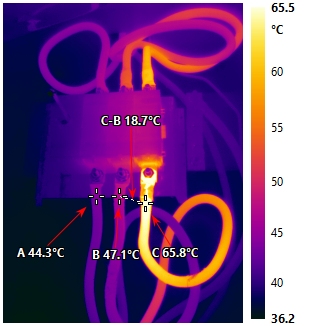
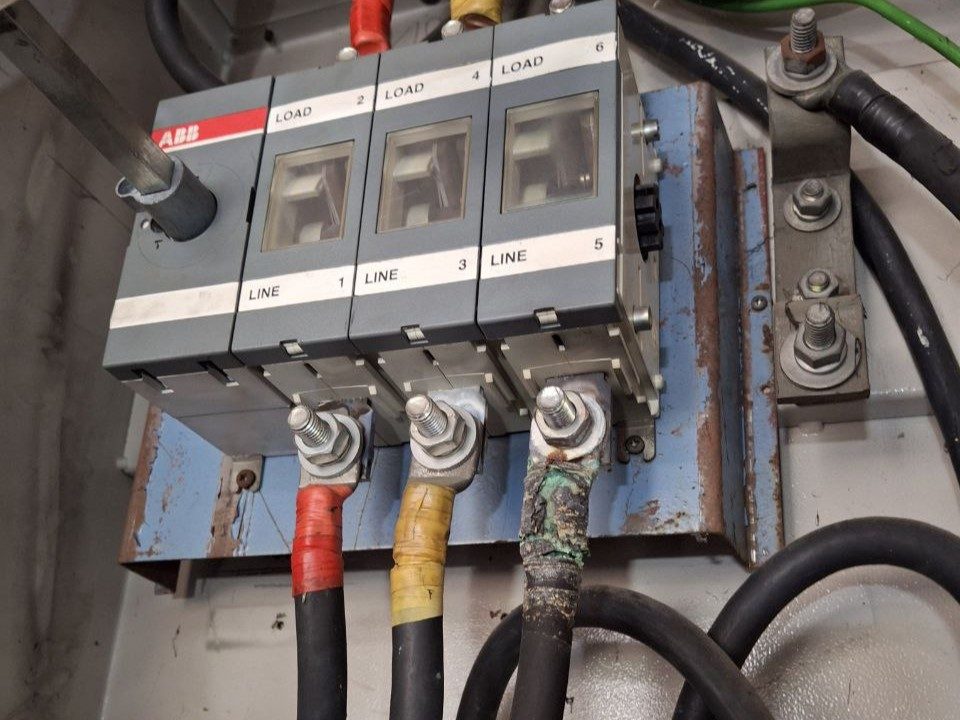
Connection fault · Danger class
The connection running hot.
One compressor-isolator terminal reached 65.8 °C — 18.7 °C above the comparison point. The report traced the anomaly to the visibly deteriorated connection.
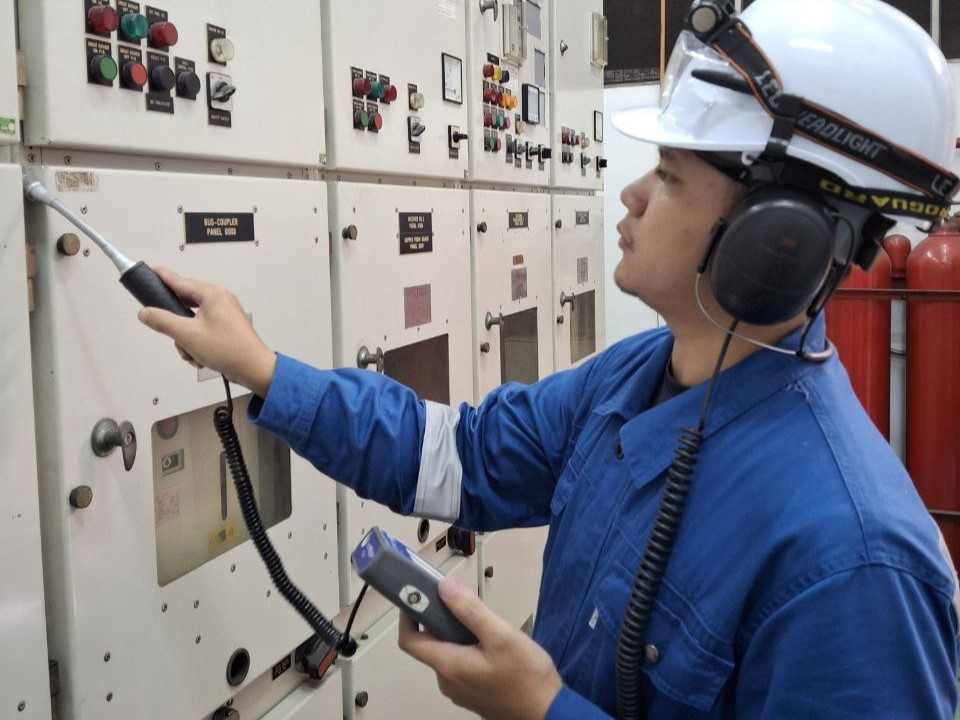
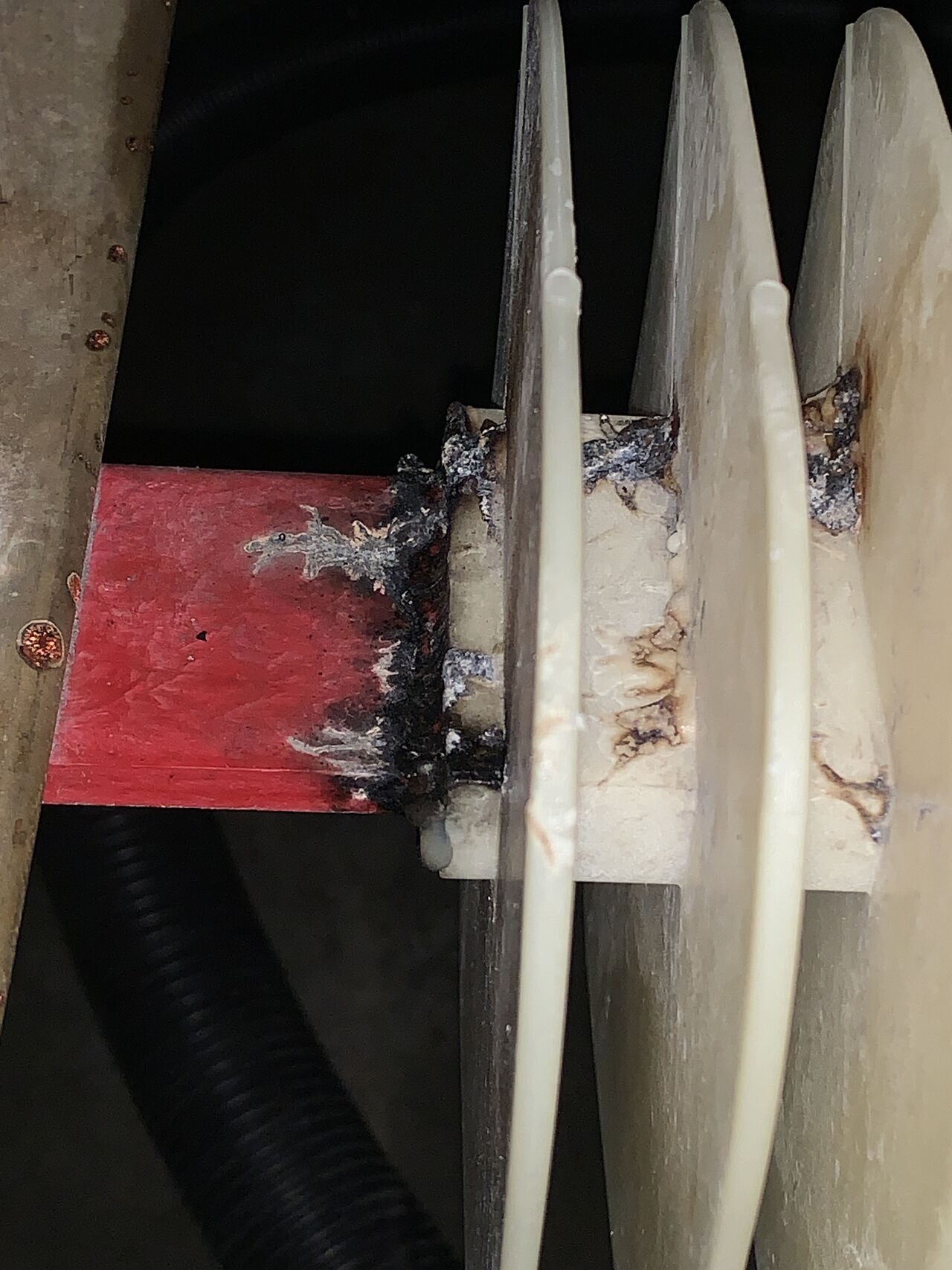
Insulation fault · Closed panel
Heard before it becomes this.
TEV and ultrasound can register discharge activity while the board remains closed and running. Carbon tracking is what that deterioration can look like once the panel is opened.
04 / One-off, or programme
One reading is a photo. Three are a forecast.
A one-off survey establishes the baseline. Repeat the same points with the same methods and the evidence begins to show direction, then forecast.
01 /Year one
The baseline.
Every panel, joint and termination is mapped live, rated and registered. This can stand alone as a one-off survey.
02 /Year two
The direction.
The same points are read again. Change becomes visible and completed fixes can be checked against the baseline.
03 /Year three
The forecast.
Three comparable readings show deterioration rates, repeat offenders and evidence for the next maintenance budget.
Selected past clients
Electrical survey work already delivered.
Thermography and partial discharge surveys delivered across industrial and port environments, including Panasonic, Westports and GDC Putrajaya.



05 / After a finding
You get a next action, not just an anomaly.
Every finding is tied to the asset, rated and translated into a proportionate next move. The report does not turn every anomaly into a larger job.
- 01
Register the evidence.
Asset, location, instrument reading, visual context and severity are recorded together.
- 02
Set the next action.
Monitor, plan a repair, verify during an outage or deepen the test — according to the finding.
- 03
Fix the boundary.
If switching, isolation, deeper testing or corrective work is needed, the responsible party and separate scope are named first.
When a finding points beyond the assessment: See the wider electrical routes →
06 / Before you approve the scope
The practical questions, answered.
The proposal removes the unknowns that usually hold an electrical survey up. You know what will happen, what will arrive and what is outside the price before work begins.
- Will the plant need to stop?
- Basic and Standard screen live equipment while it keeps running. Comprehensive adds tests that are scheduled inside an agreed outage window.
- Do we need to choose the tests?
- No. Give us the asset, the operating concern and the decision the result must support. The proposal recommends the depth and states why.
- Can the scope grow without approval?
- No. Assets, access, methods, report depth and price are fixed in the proposal. Deeper testing, specialist support and corrective work are quoted separately.
- We already have a competent person inspecting. Why this as well?
- Because the Electricity Regulations 1994 set who inspects and how often, never what to look for. Nothing in them requires anyone to measure a live connection for heat — and loose connections are the single largest cause of electrical failure. The full argument →
- Where can AMKA attend?
- We are based in the Klang Valley and serve clients across Malaysia. Site location and access requirements are accounted for in the proposal.
07 / What to send
Start with whatever scope you already have.
A complete specification is not required. Any one of these is enough for AMKA to begin shaping the free proposal or quotation.
- Asset list or BQ
Attach the existing schedule or bill of quantities in the proposal form. We will work from the asset names, quantities and stated requirements.
- Existing evidence
A previous report, trip history, maintenance record, reading or photograph helps us identify the right starting depth.
- Just the need
Name the asset, location, urgency and the decision the output must support. We will identify what else is needed.